





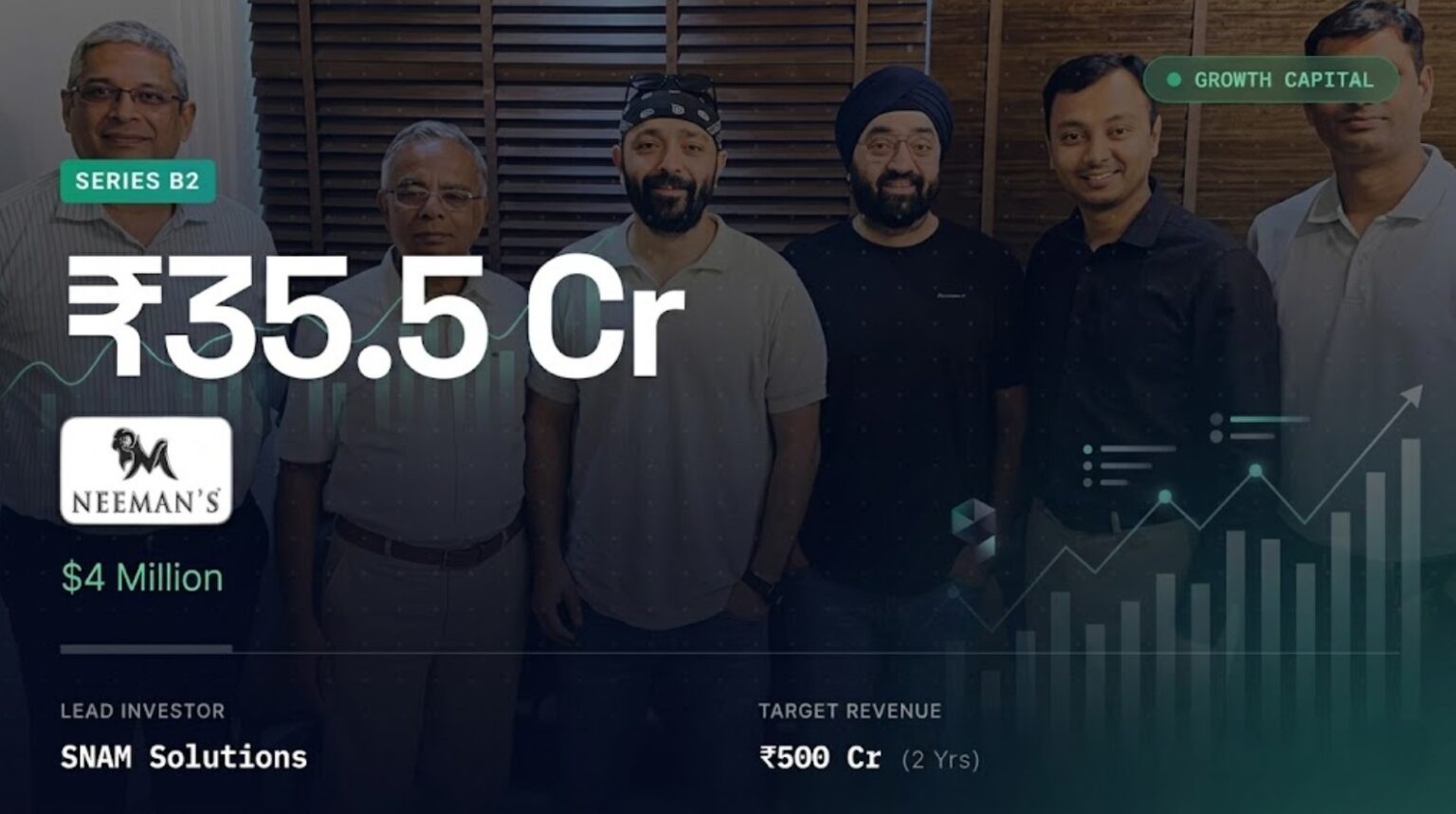

Hyderabad-based sustainable footwear brand Neeman’s has raised $4 million (₹35.5 crore) in its Series B2 funding round, led by SNAM Solutions, part of the SNAM Group of Companies.
The round also saw continued participation from existing investors including Anicut Capital, Enam Investments, and Sharrp Ventures, reflecting sustained investor confidence in the company’s omni-channel strategy.
Scaling Beyond a Niche
Founded in 2017 by Taran Chhabra and Amar Preet Singh, Neeman’s initially gained traction with Merino Wool shoes designed for socks-free comfort in Indian conditions.
Over time, the brand has expanded its portfolio to include sneakers, slip-ons, and slippers made from sustainable materials such as recycled plastic, cotton, and eco-friendly EVA, broadening its appeal beyond its original niche.
Focus on Offline Expansion
With the new funding, Neeman’s plans to accelerate its offline retail expansion. As digital customer acquisition costs continue to rise, physical stores offer an opportunity to enhance brand visibility and provide customers with a tactile shopping experience—particularly important in the footwear category.
The company is aiming to strengthen its omni-channel presence by integrating online platforms with a growing network of retail outlets.
Growth Targets
Neeman’s expects to close FY26 with revenue of around ₹180 crore and has set a target of reaching ₹500 crore in the next two years.
Why It Matters
The brand’s strategy reflects a broader shift in India’s D2C ecosystem, where companies that initially scaled online are increasingly investing in offline channels to drive sustainable growth.



With backing from both venture investors and established business groups, Neeman’s is positioning itself to capture a larger share of the evolving sustainable fashion market.
ApnaStory Inside
Neeman’s expansion into offline retail underscores a key evolution in India’s D2C landscape—profitability and scale now depend on omni-channel presence. As customer acquisition costs rise online, physical stores are becoming strategic assets, especially for tactile categories like footwear. The shift signals that sustainable brands are no longer niche—they are positioning for mainstream adoption.