




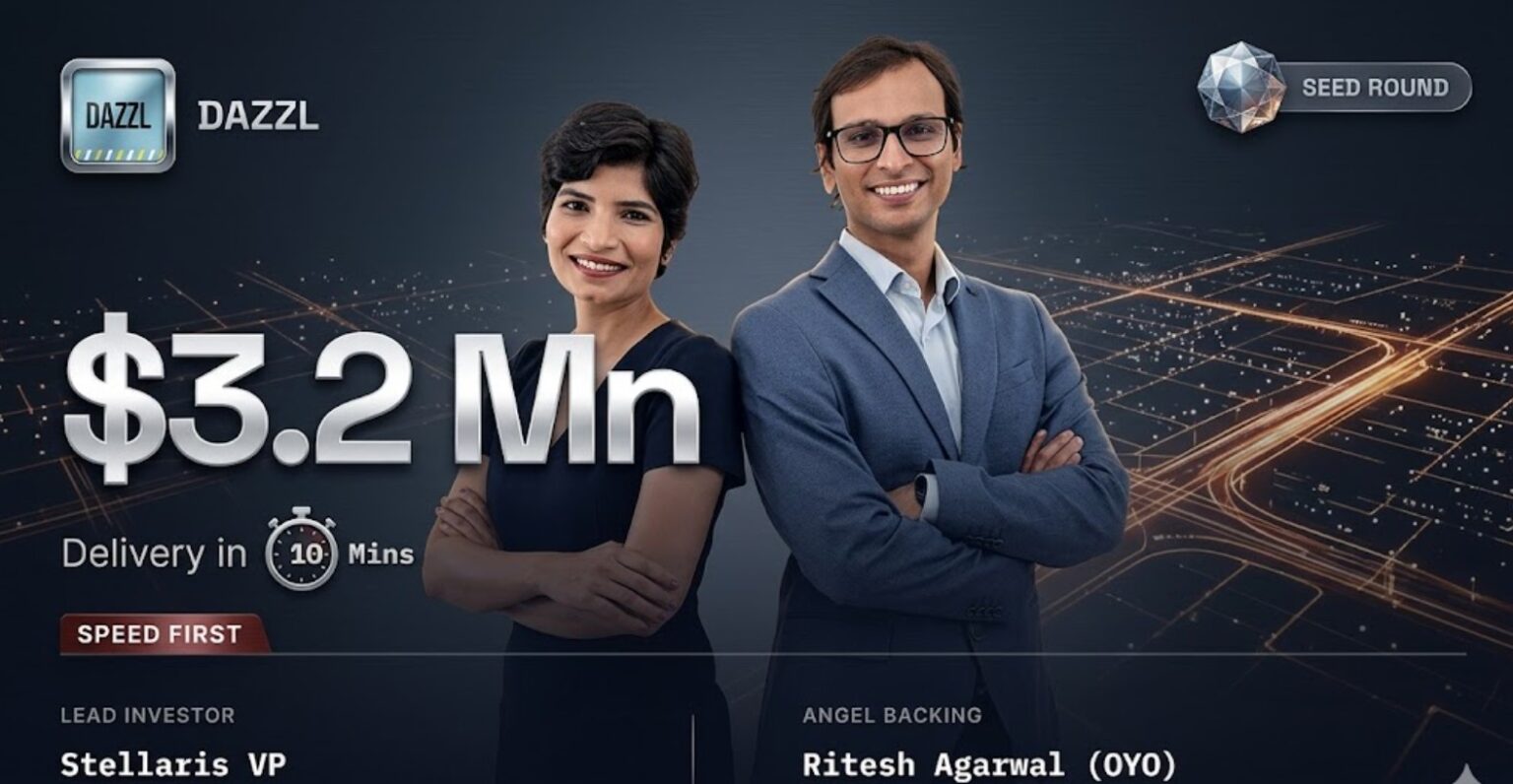

Bengaluru-based beauty services startup DAZZL has raised $3.2 million (₹29 crore) in a seed funding round led by Stellaris Venture Partners, as it looks to bring quick commerce speed to on-demand beauty services.
The round also saw participation from prominent angel investors including Ritesh Agarwal (Founder, OYO), Maninder Gulati, Abhinav Sinha, and Sameer Brij Verma, signalling strong backing for the emerging “services quick commerce” model.
The 10-Minute Services Play
Founded by Komal Solanki (former VP at Nexus Venture Partners) and Ashish Bajpai (ex-OYO), DAZZL is targeting high-frequency beauty services such as blow-dries, head massages, and pedicures.
Unlike traditional platforms that require advance bookings, DAZZL aims to dispatch trained professionals to customers within 10 to 20 minutes, bringing an instant, on-demand experience similar to quick commerce platforms.
Expanding the Quick Commerce Playbook
India’s quick commerce market, estimated at around $6 billion in 2025, is projected to grow to $40 billion by 2030. While the segment has largely focused on delivering physical goods, services are emerging as the next growth frontier.
DAZZL is positioning itself early in this space by applying rapid delivery logistics to personal care services, tapping into growing consumer demand for convenience and immediacy.
Why It Matters
The startup’s model reflects a broader shift where speed and convenience are becoming key differentiators across categories. By combining operational logistics with service delivery, DAZZL is attempting to solve a complex challenge—bringing trained professionals to customers at short notice while maintaining quality.
With a founding team that blends venture capital experience and operational scale expertise, the company is aiming to build a scalable framework for instant service delivery.


ApnaStory Inside
DAZZL’s funding highlights a clear evolution in quick commerce—from delivering products to delivering services. The core challenge now shifts from inventory management to workforce logistics. If executed well, this model could redefine how urban consumers access everyday services, opening the door to a new category of “instant service” startups built on speed, availability, and operational precision.