





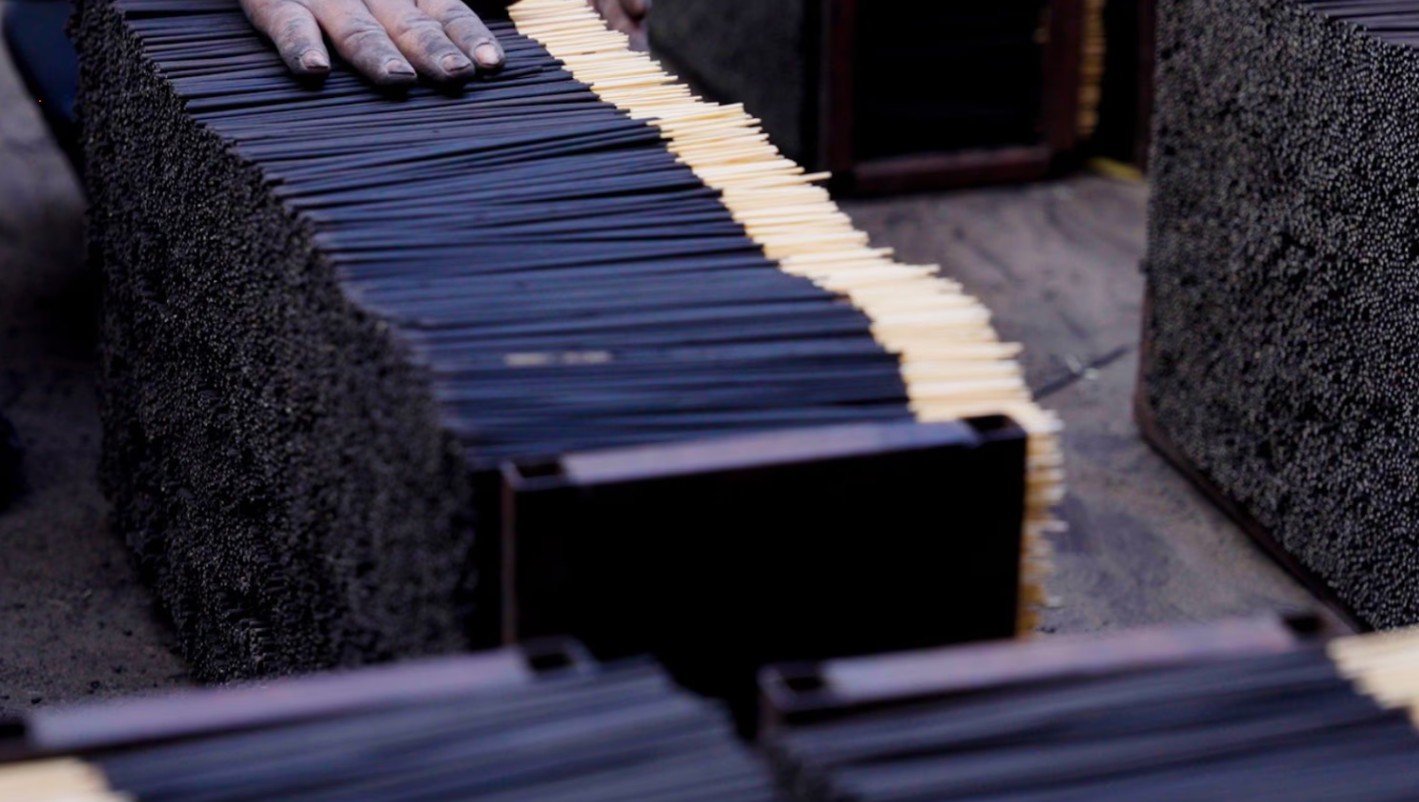

In Uttar Pradesh’s Kannauj district, the agarbatti (incense sticks) and dhoopbatti (incense cones) industry continues to grow as a steady, consumption-driven sector. Unlike seasonal goods, incense products are used every day in homes, retail spaces, and religious settings, creating a constant demand that depends heavily on consistent quality, fragrance, and burn performance.
Recognised under the One District One Product (ODOP) initiative, Kannauj’s incense industry reflects a blend of traditional craftsmanship and modern production efficiency. The sector has evolved over time, adapting to increasing demand while maintaining its roots in natural raw materials and manual expertise.
A Process Built in Stages
The manufacturing cycle is not linear but divided into multiple stages. It begins with preparing raw materials such as charcoal powder, sawdust, bark-based powders, and bamboo sticks. These components are combined carefully to create the base mixture that forms the foundation of the incense product.
The mixture is then applied to bamboo sticks, shaped, dried, and eventually packed. Each step is handled independently, with workers specialising in tasks like blending, rolling, drying, and packaging.
Among all stages, raw material preparation remains one of the most labour-intensive. Workers are often involved in continuous mixing and sieving processes, which require precision and endurance.
Shift Towards Machine-Assisted Production
Over the years, the industry has gradually moved from manual production to machine-supported operations. This transition has helped increase output while also creating more structured employment opportunities across different stages of manufacturing.
Even with this shift, a large portion of production continues to operate within a semi-manual framework, preserving traditional techniques while benefiting from improved efficiency.
Growth Through Bulk Supply Networks
A significant share of Kannauj’s incense production is supplied in bulk rather than sold as branded products. These unbranded sticks are distributed across wider markets, where they are repackaged and sold under various labels.
This system allows manufacturers to focus on production scale while relying on external distribution networks for branding and retail.
Entrepreneurial Expansion
Entrepreneurs like Tariq Ali highlight the sector’s growth trajectory. Starting with limited resources nearly two decades ago, his operations have expanded steadily through consistent market engagement and gradual adoption of machine-assisted processes.
From a small workforce of around 25–30 workers, his unit now connects with nearly 100–150 individuals across different production stages. The business supplies products across domestic markets and has also reached international buyers.
Looking Ahead: From Bulk to Brand
With increasing production capacity and market exposure, many units are now exploring the possibility of building their own brand identity. While bulk supply remains the dominant model, the shift towards branding could unlock higher value opportunities in the future.
A Steady Industry Driven by Everyday Use
Kannauj’s agarbatti and dhoopbatti sector continues to be shaped by how efficiently raw materials move through each stage of production. As long as this system remains consistent, the industry is well-positioned to sustain its role in meeting everyday demand—both in India and beyond.