





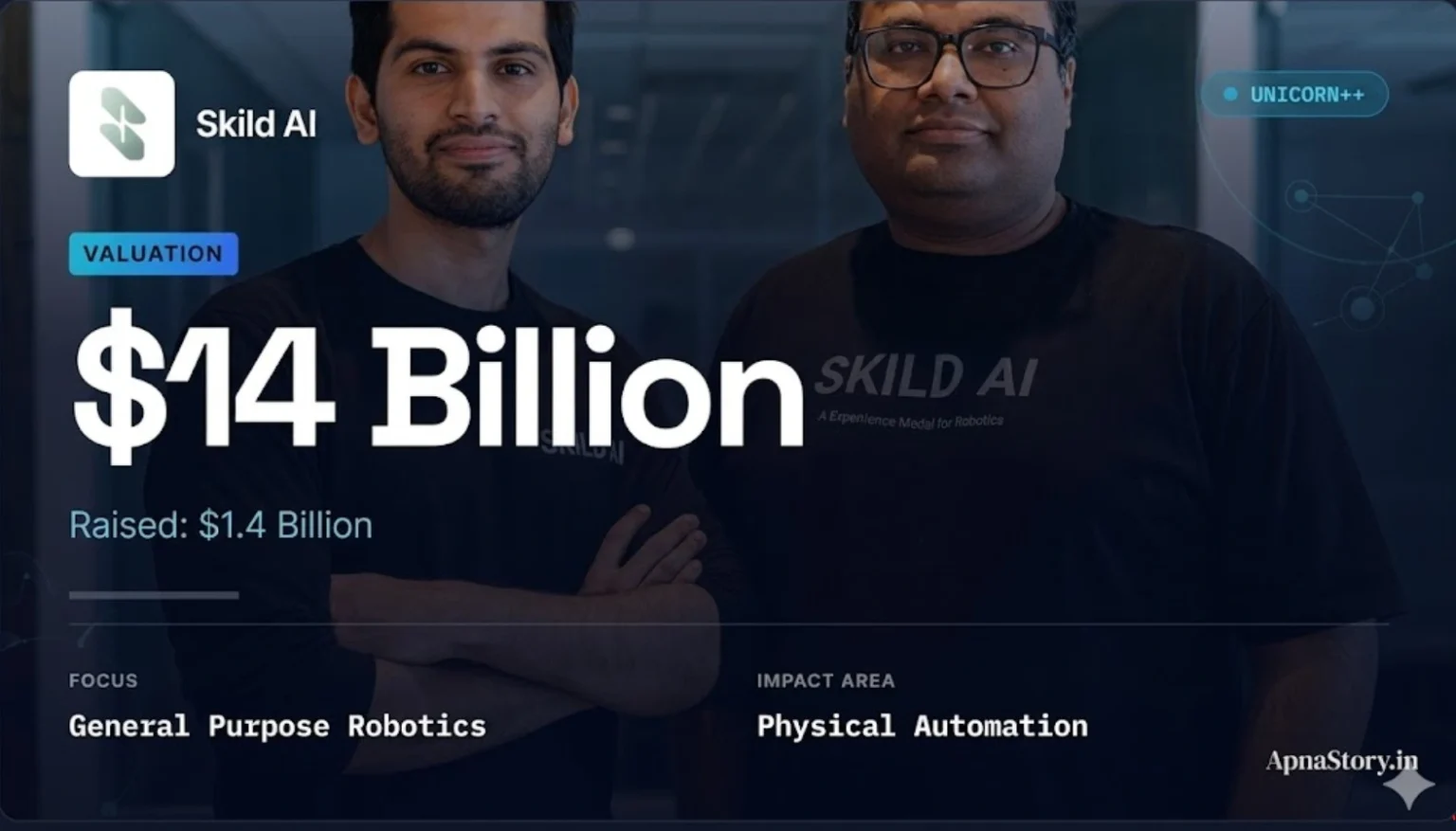

The global race in robotics has taken a major leap forward. Skild AI, a company focused on building intelligence for general-purpose robots, has raised $1.4 billion in fresh funding, pushing its valuation beyond $14 billion.
This marks one of the largest funding rounds in the robotics sector and highlights a growing shift in investor focus from generative AI tools to real-world automation powered by artificial intelligence.
A New Phase in AI Investment
Over the past few years, capital has largely flowed into digital AI platforms such as chatbots and language models. However, the latest funding round for Skild AI suggests that attention is now moving toward physical AI systems that can operate in real environments.
The company is working on creating a generalized intelligence layer that allows robots to learn, adapt, and function in unpredictable settings rather than controlled industrial spaces.
What Skild AI Is Building
Unlike traditional robots designed for repetitive tasks, Skild AI is focused on enabling machines to handle multiple functions across different environments.
This includes applications in sectors such as manufacturing, logistics, healthcare, and defense, where adaptability and real-time decision-making are critical.



The goal is to shift value from hardware to software by making intelligence the core differentiator in robotics systems.
Why This Matters
General-purpose robotics has long been considered one of the most complex challenges in artificial intelligence. Building machines that can understand and respond to dynamic, real-world conditions could significantly change how industries operate.
With this funding, Skild AI joins a growing group of companies aiming to define the future of automation beyond factory floors.
Industry Implications
The rise of intelligent robotics could reshape multiple sectors by improving efficiency and reducing reliance on manual processes. At the same time, it raises questions around workforce transformation and the pace of automation adoption.
For emerging economies, including India, this shift presents both opportunities in manufacturing and challenges related to labor dynamics.
Key Takeaway
Skild AI’s funding signals a clear shift in the AI landscape. The focus is moving beyond digital applications toward physical systems that can interact with the real world, potentially redefining how industries approach automation in the coming years.