




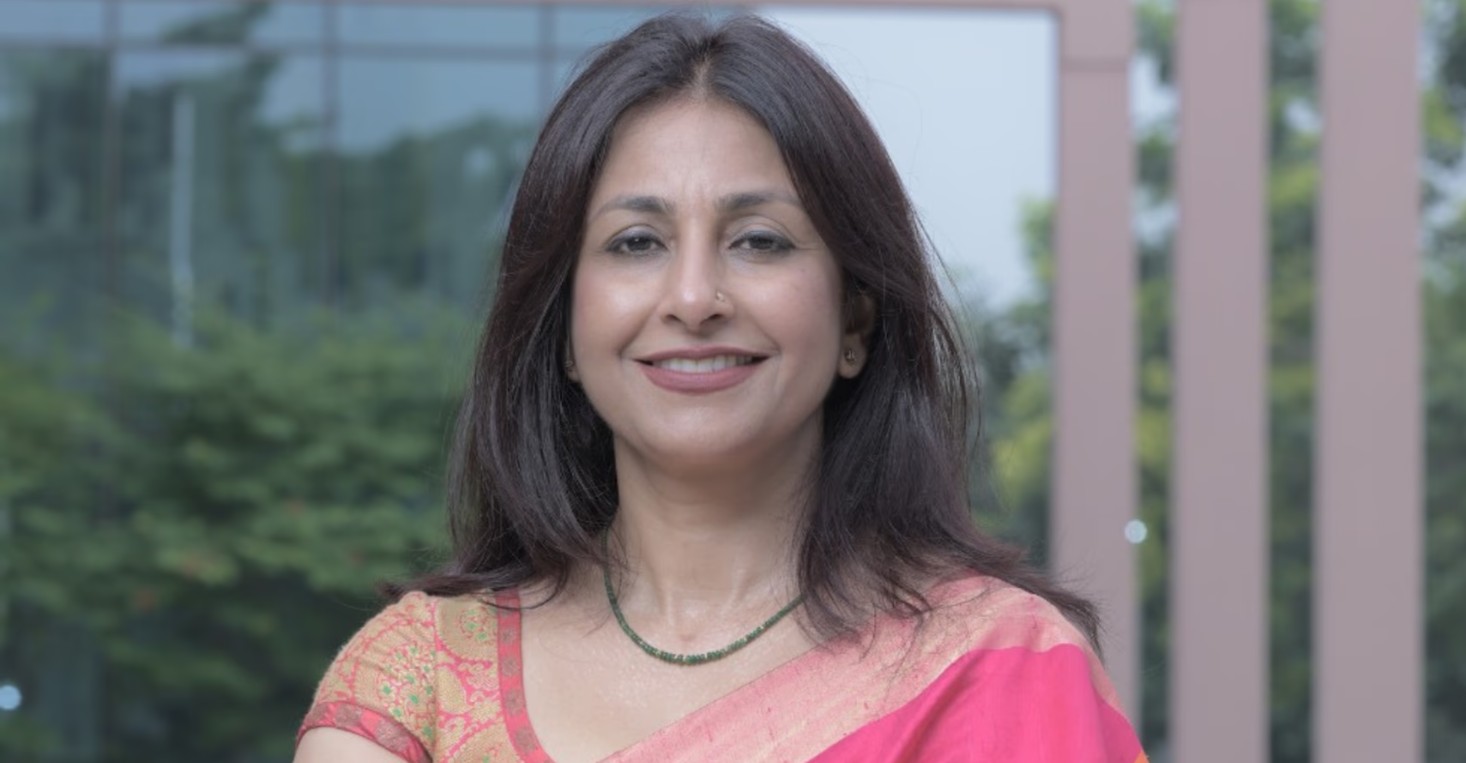

Nidhi Bhasin, CEO of Digital Green Trust, is leading a new phase of innovation aimed at bridging India’s rural knowledge gap through technology. With over two decades of experience in social development and community-led initiatives, she is now focused on integrating AI and conversational tools into grassroots agricultural systems.
At the centre of this effort is FarmerChat, an AI-powered, multilingual advisory platform that provides real-time, localised guidance to smallholder farmers on agriculture, climate practices, and livelihoods.
The Real Barriers to Agri-Tech Adoption
Despite rapid growth in agritech, adoption among smallholder farmers remains uneven. According to Bhasin, the challenge is not a single bottleneck but a combination of factors:
- Access: While smartphone penetration has improved, many farmers still rely on shared devices. Women, in particular, face limited ownership.
- Trust: Farmers operate under high risk—unreliable advice can impact an entire season’s income.
- Timeliness: Information often exists but does not reach farmers when critical decisions need to be made.
Women Farmers: Invisible Yet Central
A key issue Bhasin highlights is the systemic invisibility of women farmers. Despite playing a central role in agriculture, they are often seen as labour rather than decision-makers.
With increasing male migration to cities, women are now taking on more farming responsibilities. However, their access to advisory systems, credit, and tools remains limited.
Digital platforms, when designed inclusively, can help shift this dynamic by giving women direct access to reliable information and decision-making support.
Designing Tech for Real Users
One of the biggest gaps in agri-tech, Bhasin explains, lies in flawed design assumptions. Many platforms are built for users with:
- Personal smartphones
- Stable internet connectivity
- Comfort with text-heavy interfaces
In reality, rural women often use shared devices, have limited time, and prefer local-language, voice-enabled interfaces.
Platforms like FarmerChat address this by focusing on simplicity, multilingual support, and contextual relevance—leading to stronger engagement.
Measurable Impact on Ground
Digital Green Trust’s work spans over 15,200 villages, impacting more than 1.9 million smallholder farmers, nearly 90% of whom are women.
Key outcomes from FarmerChat include:
- 45% of users are women
- Women use the platform 2–3 times more frequently than men
- 96% of women users report increased confidence in decision-making
- 60% of users take action based on advisory
These metrics indicate not just access to information, but real behavioural change and growing agency.
Climate Challenges Are Rising
Farmers are increasingly reporting new climate-related risks, including:
- Unpredictable rainfall and shifting crop cycles
- Emerging pest and disease patterns
- Heat stress and water scarcity
This has led to a surge in demand for real-time, hyperlocal advisory—making AI-driven tools more critical than ever.
The Role of AI in Climate Resilience
Bhasin identifies hyperlocal, real-time advisory as the most effective intervention for improving climate resilience. Platforms like FarmerChat deliver:
- Multilingual, voice-enabled guidance
- Context-specific recommendations
- Climate-informed decision support
In states like Odisha, Bihar, and Jharkhand, this has already led to increased awareness and adoption of regenerative farming practices.
Beyond Access: Building Confidence and Livelihoods
Digital inclusion is not just about access—it’s about empowerment. Bhasin notes that increased confidence among women farmers translates into better crop planning, pest management, and income stability.
Real-life examples, such as farmers expanding land use and diversifying crops, highlight how technology can directly impact livelihoods.
The Bigger Picture
Nidhi Bhasin’s work underscores a critical shift in India’s agricultural future—where technology, climate resilience, and gender inclusion intersect. The focus is no longer just on scaling digital tools, but on designing systems that truly reflect the realities of rural users.