




ApnaStory | Tech Desk | 2026
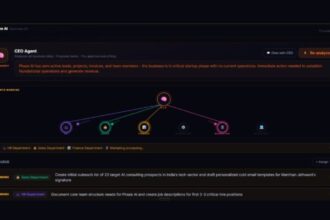
Microsoft has officially launched MAI-Image-2, its latest in-house text-to-image AI model, marking a significant step in the company’s push to strengthen its own artificial intelligence ecosystem.
The release reflects Microsoft’s evolving strategy—moving beyond reliance on external AI providers and building a more balanced portfolio of proprietary and partner technologies.
A Smarter Multi-Model Approach
MAI-Image-2 is part of Microsoft’s broader multi-model framework, where platforms like Copilot dynamically select the most suitable AI model depending on the task.
Rather than replacing existing partnerships, the new model enhances flexibility by giving Microsoft greater control over key capabilities, especially in image generation.
Built on a Strong Foundation
The model builds upon MAI-Image-1, which debuted in October 2025 as Microsoft’s first fully in-house image generator.
With MAI-Image-2, the company has focused on:
- Improved image quality
- Better consistency
- More reliable outputs
According to industry benchmarks, the model now ranks among the top-performing text-to-image systems globally.
Focus on Real-World Creative Needs
Microsoft developed MAI-Image-2 with feedback from photographers, designers, and visual creators, ensuring it performs effectively in real-world workflows—not just controlled testing environments.
Key Strengths:
- Photorealism: Generates highly realistic images with accurate lighting and textures
- Text Rendering: Produces clearer, properly aligned, and readable text within images
- Scene Complexity: Handles multiple elements while maintaining visual coherence
These improvements address long-standing limitations in earlier AI image tools.
Competing in a Crowded AI Landscape
MAI-Image-2 enters a highly competitive space dominated by major AI players.
- Some models are known for instruction accuracy and editing flexibility
- Others lead in speed and multi-element consistency
Microsoft’s approach stands out by prioritizing reliability and professional-grade output, particularly for commercial and design use cases.
Meanwhile, platforms like Midjourney continue to dominate artistic and stylized content, while Microsoft positions its model for practical applications.
Integration Across Microsoft Products
The new model is being integrated into:
- Bing Image Creator
- Microsoft Copilot
In many cases, Microsoft uses intelligent routing systems to determine whether MAI-Image-2 or another model is best suited for a given request.
Expanding the Internal AI Ecosystem
MAI-Image-2 is just one part of a rapidly growing AI stack inside Microsoft.
Other developments include:
- MAI-Voice-1 for speech generation
- MAI-1-preview chatbot system
- Robotics models derived from its Phi-based vision-language research
Together, these tools indicate Microsoft’s ambition to build a fully integrated AI ecosystem spanning text, image, voice, and automation.
A Strategic Shift in AI Leadership
Microsoft’s AI direction has shifted notably since 2024, when Mustafa Suleyman took charge of its AI division.
Under his leadership, the company has:
- Accelerated internal AI development
- Formed advanced research teams
- Invested in long-term AI capabilities
This includes the creation of the Microsoft AI Superintelligence team, focused on building advanced yet controllable AI systems.
The Bigger Picture
Microsoft is increasingly focusing on AI systems rather than standalone models.
Its long-term vision centers on agent-based architectures, where multiple specialized models collaborate to complete complex tasks.
In this ecosystem, MAI-Image-2 acts as a critical component—powering image generation while working alongside other AI tools.
Final Take
The launch of MAI-Image-2 highlights Microsoft’s growing independence in AI development. Instead of relying solely on external partnerships, the company is building a hybrid AI strategy that blends internal innovation with external collaboration.
As competition intensifies, MAI-Image-2 positions Microsoft as a stronger contender in the race to define the future of AI-powered creativity.